6 Conversational Marketing Examples

Ilias Ism
Last updated:
15 min read
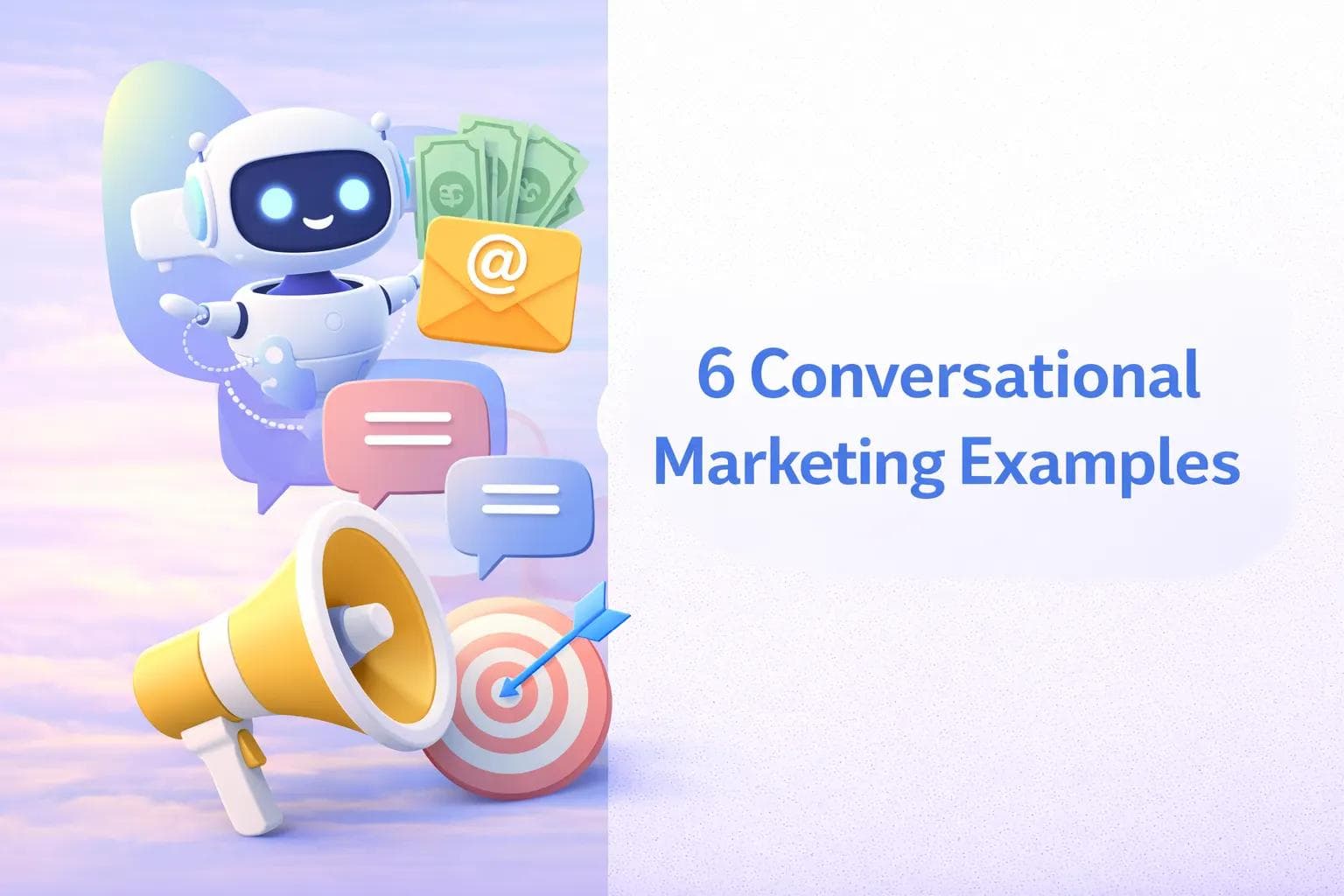
Traditional marketing is one-way communication. You send emails, run ads, and post on social media, but your audience consumes it passively, if they consume it at all.
Conversational marketing flips this approach completely. Instead of broadcasting messages and hoping someone responds, you start real-time conversations with potential customers the moment they show interest. It's engaging, personalized, and fast.
The numbers prove it works:
- Up to 10x higher conversion rates compared to static forms
- More qualified leads entering sales pipelines
- Higher order completion rates through messaging channels
- Improved customer satisfaction scores across touchpoints
Here's the thing: conversational marketing isn't one-size-fits-all. Some companies use it to qualify leads. Others handle customer support. Some go full automation with AI. Others mix bots with human agents.
We've broken down 6 conversational marketing examples - real strategies companies use right now to drive results. For each one, you'll see how it works, why it's effective, and how to implement it in your business.
Let's get into it.
What is Conversational Marketing?
This dialogue-driven strategy engages customers in real-time through chatbots, live chat, messaging apps, and AI agents. Think of it as bringing the in-store experience online. When someone walks into a physical store, a sales associate greets them immediately. Conversational marketing does the same thing digitally.
The approach eliminates friction by giving customers instant answers while helping businesses qualify leads faster and close deals quicker. No waiting for email responses or navigating phone menus.
Conversational marketing now goes beyond simple bots. Modern AI understands what customers mean, learns from each chat, and gives helpful answers. It sends tough questions to real people when needed.
Now let's look at how businesses actually implement this across different use cases.
Conversational Marketing Examples That Drive Results
Conversational marketing works differently for every business. Each approach solves different challenges - from getting more leads to helping customers faster to increasing sales.
Here's a quick look at six proven strategies, what they work best for, and real brands using them successfully:
![[object Object]](/_next/image?url=https%3A%2F%2Fcdn.sanity.io%2Fimages%2Fi6kpkyc7%2Fprod-dataset%2Fef84aa1b0d6b636a4b892cf990854bc3ae1a8a79-1408x848.png&w=3840&q=75)
Now let's look at each strategy in detail:
1. AI Chatbots for Lead Qualification
Brand Example: Chatbase
![[object Object]](/_next/image?url=https%3A%2F%2Fcdn.sanity.io%2Fimages%2Fi6kpkyc7%2Fprod-dataset%2Fec82e125e7d0254d3db4cc32df40d5bb750b53ac-2872x1764.jpg&w=3840&q=75)
Chatbase's AI chatbots qualify leads directly on your website through natural conversations. When visitors arrive, the chatbot asks targeted questions about business needs, budget, timeline, and challenges. Unlike static forms, Chatbase collects lead data conversationally, then uses AI-powered sentiment analysis to score responses and route high-intent prospects to sales reps while sending educational content to others.
How it works: Chatbase's AI agents are trained on your business data using RAG, so they understand your products and ideal customer profile. You configure custom triggers—like when visitors mention "pricing" or "demo"—to initiate lead qualification flows. The chatbot asks strategic questions about budget, timeline, and pain points, then analyzes responses instantly. High-scoring leads get instant sales access through CRM integrations, while lower-scoring visitors receive educational resources.
Why it's effective: Sales teams save 50-70% of qualification time by only talking to pre-vetted prospects. Chatbase captures leads 24/7, even when forms sit untouched outside business hours. The conversational approach reduces form abandonment—visitors don't feel like they're filling out paperwork. Plus, Chatbase provides full conversation context to your sales team, not just names and emails, so reps can follow up with relevant insights.
How to implement: Define your ideal customer criteria first. Upload your product docs, website content, or FAQs to train your Chatbase agent. Then set up the "Collect Leads" AI action with custom triggers (e.g., "when user mentions pricing" or "after 5 minutes of engagement"). Configure your qualification questions in the chatbot's custom prompt, and connect your bot to your CRM so qualified leads flow directly into your sales pipeline. For a complete guide on AI lead generation strategies, see our detailed breakdown.
2. Messenger/WhatsApp Marketing for Customer Engagement
Brand Example: Sephora
Sephora uses Facebook Messenger to engage customers with personalized product recommendations and beauty tips. Their chatbot helps users book in-store appointments, find products based on skin type, and access exclusive offers. The conversational approach keeps customers engaged and drives both online and in-store sales.
![[object Object]](/_next/image?url=https%3A%2F%2Fcdn.sanity.io%2Fimages%2Fi6kpkyc7%2Fprod-dataset%2Ffbd0fa1f74c17f8bc88a042ee9cc779f7f49f294-1592x1178.webp&w=3840&q=75)
How it works: Customers message Sephora on Facebook Messenger or through their website. The bot asks questions about beauty preferences, skin concerns, and favorite products. Based on responses, it suggests personalized recommendations and sends tutorial videos or product links directly in the chat.
Why it's effective: Messaging apps have higher open rates than email (80% vs 20%). Since customers already use these platforms daily, engagement feels natural. Sephora reports increased customer loyalty and higher purchase frequency from messenger users compared to traditional email subscribers.
How to implement: Choose messaging platforms where your audience spends time. Set up business accounts on WhatsApp, Facebook Messenger, or Instagram. Create conversation flows that match customer needs and integrate with your product catalog for seamless recommendations.
3. Conversational Forms for Higher Completion Rates
Brand Example: Indochino
Indochino uses a conversational approach to solve a common problem in online fashion: getting accurate body measurements. Instead of showing a long form with 14 empty fields, they guide customers through a step-by-step measurement process that feels like working with a personal tailor.
![[object Object]](/_next/image?url=https%3A%2F%2Fcdn.sanity.io%2Fimages%2Fi6kpkyc7%2Fprod-dataset%2F5d591aedf575a1ee28730919df8feeec0bbfaf56-2048x1162.webp&w=3840&q=75)
How it works: Customers see one question at a time. Need to measure your neck? A 10-second video shows you how. Need to measure your chest? Another short video appears. Each step shows exactly what to do with a simple input box below.
Why it's effective: Measuring yourself is stressful. Get it wrong and the suit won't fit. Indochino makes it easier by showing exactly what to do at each step. Breaking 14 measurements into small, guided steps means more people finish the form and give accurate measurements.
How to implement: Need complex info from customers? Show one question at a time instead of a long form. Add short videos or images to explain what you need. Guide customers step by step until they're done.
4. AI Agents for Customer Support Automation
Brand Example: King Living
King Living uses AI agents to answer customer questions about products, customization, and delivery. The AI provides instant answers around the clock, eliminating wait times for support staff.
![[object Object]](/_next/image?url=https%3A%2F%2Fcdn.sanity.io%2Fimages%2Fi6kpkyc7%2Fprod-dataset%2F9d4c638b5c8572ba2d11b13f4d25c89f8123eac5-2000x973.webp&w=3840&q=75)
How it works: King Living trained their AI on product details, FAQs, and support information. When customers ask about sofa sizes, fabric choices, or delivery times, the AI answers right away. For complex design questions, the AI hands off the full chat history to the sales team.
Why it's effective: Furniture shopping means lots of questions about sizes, materials, and options. The AI handles common questions any time of day, so customers get help whenever they need it. This speeds up buying decisions while letting staff focus on detailed design help.
How to implement: Train an AI on your product info and help documents using tools like Chatbase. Add it to your website and decide when to pass conversations to your team.
5. Voice Assistants for Ordering
Brand Example: Domino's
Domino's lets customers order pizza through voice assistants like Amazon Alexa and Google Assistant. Customers simply say 'Alexa, order my usual from Domino's' and the system places the order without opening an app or website. This makes ordering fast and easy, especially when hands are busy.
![[object Object]](/_next/image?url=https%3A%2F%2Fcdn.sanity.io%2Fimages%2Fi6kpkyc7%2Fprod-dataset%2Fd6373a81ba07899f2895948ff80603717f295fbe-2048x1363.webp&w=3840&q=75)
How it works: Customers link their Domino's account to their voice assistant. The assistant remembers past orders and payment details. Users can reorder favorites, track delivery, or change toppings just by talking. The voice assistant confirms everything and sends order updates.
Why it's effective: Voice ordering removes all steps from buying. No typing, no clicking through menus. Domino's reports voice users order more often because it's so easy. The simpler you make purchasing, the more customers buy.
How to implement: Start with major voice platforms like Alexa or Google Assistant. Start with major voice platforms like Alexa or Google Assistant, using a Voice API to connect voice commands to your ordering system. Connect them to your ordering system and let customers save preferences for quick reordering.
6. Interactive Product Recommendations
Brand Example: Function of Beauty
Function of Beauty uses an interactive quiz to create personalized hair care products. Customers answer questions about their hair type, goals, and preferences. The quiz creates a conversational experience that makes customization simple instead of overwhelming.
![[object Object]](/_next/image?url=https%3A%2F%2Fcdn.sanity.io%2Fimages%2Fi6kpkyc7%2Fprod-dataset%2Fb0d74be4a32a71bfec4c3cdea0688c75f236d5c7-2048x878.webp&w=3840&q=75)
How it works: The chatbot asks questions like "What's your hair type?" and "What are your hair goals?" The quiz creates a custom formula based on answers and suggests specific products. The entire experience takes just a few minutes and results in products made specifically for that customer.
Why it's effective: Personalized products need customer input, but long forms scare people away. The conversational quiz makes data collection feel natural. Function of Beauty reports the quiz approach significantly increased their conversion rates compared to traditional product pages.
How to implement: Create a simple quiz based on your product selection needs. Connect it to your product database for accurate suggestions. Keep questions short and make results easy to act on.
How to Get Started with Conversational Marketing
Start with one channel and expand from there as you learn what works for your customers.
Choose Your First Channel
Choose a platform where your customers spend time. B2B companies often start with website chat. Online stores do well with Facebook Messenger or Instagram DMs. Check your analytics to see where traffic comes from, then start there.
Set Clear Goals
What do you want to achieve? More leads, faster replies, or better sales?
Set specific targets like "reply in under 10 minutes" or "get 100 leads per month through chat." Clear goals help you track if it's working.
Start Small, Then Grow
Begin with a simple chatbot that answers your top 5-10 common questions. Test it with real customers, gather feedback, and improve gradually. Add new features after the basics work well.
Track and Improve
Track key metrics like response time, conversion rate, and customer satisfaction. Review conversations weekly to spot problems or confusion. Use what you learn to make your chat better over time.
Start small, learn quickly, and scale what works.
Conclusion
Conversational marketing is now essential, not optional. Customers expect instant responses, personalized help, and conversations that feel natural - not robotic forms and delayed replies.
These six strategies prove conversational marketing drives real results:
- AI chatbots qualify leads and save sales teams 50-70% of their time
- Messaging apps get 80% open rates compared to 20% for email
- Conversational forms increase completions by 30-50%
- AI agents handle 60-80% of support questions automatically
- Voice assistants make repeat ordering effortless
- Product quizzes guide customers to better purchases
Start simple. Pick one strategy that solves your biggest problem today. If leads aren't qualifying fast enough, try chatbots. If customers abandon carts, add proactive chat. If support is overwhelmed, use AI agents.
Chatbase builds custom AI agents that answer questions accurately, qualify leads automatically, and hand off to humans when needed. Set it up in minutes without coding.
Ready to turn website visitors into conversations? Try Chatbase free and start getting results today.
Share this article: